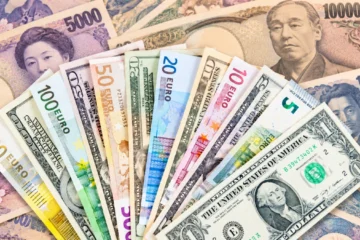
Yen faces new pressure After the earthquake in Japan, it will be more difficult for the BOJ to end negative interest rates.

The Yen faces new pressure. With the major earthquake hitting Japan on New Year's Day 2567, it will be more difficult for the Bank of Japan to end its negative interest rate policy.
On January 4, 2566, Bloomberg News reported that the yen was coming under renewed pressure as a major earthquake expected to hit Japan on New Year's Day 2567 would make it more difficult for the Bank of Japan to end its negative interest rate policy.
The yen weakened to 143.39 yen per dollar in Tokyo on Thursday morning (Jan. 4, 2567) from 141.04 yen per dollar at the end of 2566 in New York trading. The yen is expected to strengthen in 2567 on expectations that the Federal Reserve (Fed) will begin cutting interest rates in the first half of 2567, along with ultra-accommodative monetary policy adjustments. Normalizing in Japan will reduce the yield gap between these 2 economies.
Morgan Stanley and MUFG Securities Co. changed views on the BOJ interest rate decision this month, in part as the Bank of Japan must assess the negative impact of the Noto Peninsula disaster. that has an effect on the economy Any moves may not happen until April at the earliest.
Daisuke Karakama, chief market economist at Mizuho Bank Ltd., said, “Although a considerable number of foreign investors expect negative interest rates to end in January 2567, under these circumstances, the BOJ is unlikely to make any move this month. If negative rates are not lifted in January, ending in the first half of 2567 becomes questionable as well.”
Mari Iwashita, chief market economist at Daiwa Securities, has downplayed her forecast of an end to negative interest rates in January, following BOJ governor Kazuo Ueda's speech on December 25 and his interview with NHK on December 27.
Mari Iwashita said, “A move in January seems impossible. The earthquake is likely to put pressure on manufacturing activity, while the government may have to budget additional funds for recovery measures.” She added that a move away from negative interest rates is expected in April 2567.
BOJ Governor said on Thursday (Jan. 4, 2567) in a speech that the BOJ would make full preparations to support the post-earthquake financial system. And it is hoped that wages and inflation will increase in balance by 2567.
The depreciation of the yen after the big quake is in stark contrast to what happened in March 2554 when the deadly earthquake and tsunami hit. This has sparked an intervention to sell the yen by Japan, the United States and Europe. The move is intended to halt the appreciation of the yen due to the repatriation of assets held overseas by Japanese companies. The Japanese currency later hit an all-time high of 75.35 in October that year.
Karakama, an analyst at Mizuho, said the situation is different now. Japan had accumulated a trade surplus for many years at that time, and corporate demand for the yen supported its appreciation. Now there is a deficit, so it doesn't make sense to expect the yen to react in the same way to the earthquake.