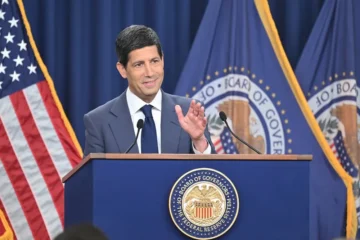
Financial markets are beginning to lower expectations of a Fed interest rate cut this year, following strong employment figures. The Iran-Iran conflict is driving up energy prices, risking further inflation. Analysts are beginning to warn the Fed may have to “raise interest rates” instead of cutting them.
On May 9, 2569, CNBC reported that the U.S. Federal Reserve (Fed) is facing a situation that makes "cutting interest rates" increasingly difficult, as the latest U.S. economic data remains stronger than expected, while inflationary pressures are increasing due to soaring energy prices resulting from the war in Iran.
The U.S. labor market continues to show strong signs, with non-farm payroll jobs added by 115,000 in April, exceeding analysts' expectations, and the unemployment rate remaining stable at 4.3%.
This data has led investors to believe that the Fed does not have an urgent need to cut interest rates to stimulate the economy, as the US economy is not yet showing signs of a severe slowdown.
Meanwhile, inflation remains a concern, following the Iran-Iran conflict which caused oil and energy prices to rise, potentially increasing the cost of goods and the cost of living.
Chicago Federal Reserve President Oster Gulsby told CNBC that the U.S. labor market remains "stable" and there are no clear signs of weakness, but he acknowledged that inflation continues to move in a "worrying direction."
Previously, many investors expected the Fed to cut interest rates several times in 2569, but the market is now beginning to adjust its view. Several financial institutions, including Barclays, now believe that the Fed may "not cut interest rates at all" throughout this year and may have to wait until 2570 to begin easing monetary policy.
Samuel Tombs, chief U.S. economist at Pantheon Macroeconomics, stated that the Fed would only cut interest rates if the labor market “severely deteriorated,” a situation for which there are currently no signs.
Former Federal Reserve Vice Chairman Roger Ferguson even warned that investors should not rule out the possibility that the Fed might raise interest rates again later this year if inflation continues to accelerate.
The Fed is currently maintaining its policy interest rate at 3.50%-3.75%, after gradually cutting interest rates several times throughout 2568.
Analysts believe the key factors the Fed will be watching going forward are the direction of inflation, oil prices, and the strength of the labor market. Because if the economy remains stable and inflation doesn't fall below its 2% target, the Fed will have little reason to cut interest rates anytime soon.
Reference: www.cnbc.com