



True Corporation unveils its Data Privacy + Responsible AI formula to drive business based on a foundation of trust.
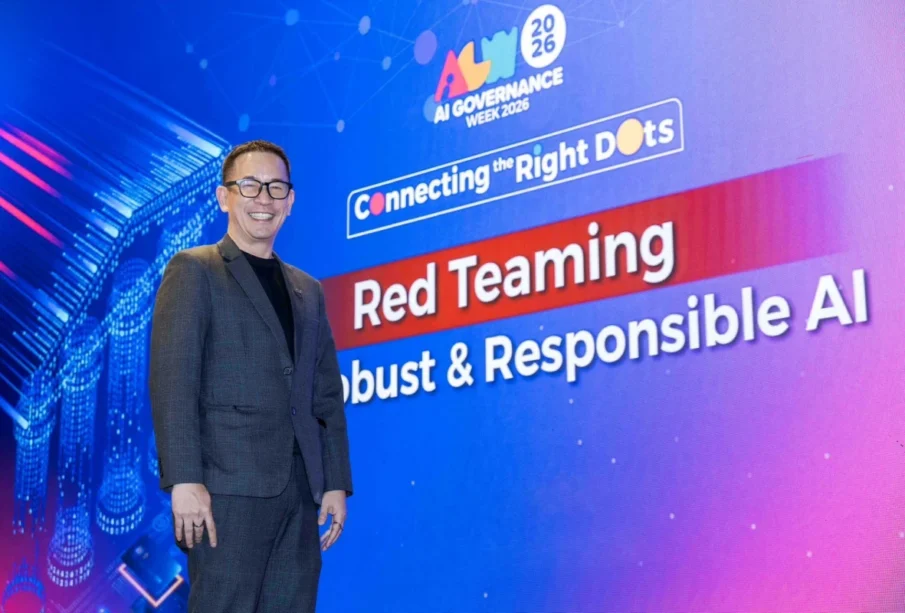
True Corporation unveils a major challenge in the AI era, where intelligence must be coupled with responsibility. They present their formula, "Data Privacy + Responsible AI," to drive business based on trust, fostering innovation and growth alongside security, fairness, and reliability in a world where AI increasingly influences people's lives and decisions.
On July 14, 2569, in an era where algorithms play a crucial role in driving business and people's lives, the true value of technology is not measured solely by its intelligence, but also by its foundation of safety, fairness, and respect for human rights.

Mr. Montri Sathapornkul, Head of Data Protection at True Corporation Public Company Limited , conveyed True's perspective as a Thai tech company striving to become an AI First Organization. He emphasized that "Responsible AI" is not just a regulatory framework, but a crucial element in conducting business responsibly, encompassing everything from system design and operation, the data used for processing, to assessing and managing potential impacts on people and society.
AI security should not be viewed as a limitation to innovation, but rather as a foundation that enables organizations to confidently develop and implement technology without causing discrimination, violating privacy, or negatively impacting people without adequate human safeguards and accountability.
Therefore, AI testing must look beyond technical accuracy and encompass data quality, bias risk and fairness, explainability of results, privacy, security, misuse risk, and mitigation mechanisms. This is especially true for large-scale language models (LLMs), which should not be evaluated solely on international standards but must be tested in relation to the Thai language, its laws, culture, social context, and real-world applications in the country.
"The key question is not just whether AI works, but whether AI works appropriately, safely, and fairly in the real-world context of its application. And for Thailand, we must be able to answer whether AI understands and functions appropriately within the context of the Thai people."
Mr. Montri further stated that another important dimension of Responsible AI is designing services so that everyone can access the benefits and be protected by the technology comprehensively and equally. True CyberSafe is one example of how technology and AI are used to develop services that prioritize security, trust, and social responsibility.
With AI capable of detecting over 7.5 million suspicious links per day, covering more than 50 million users, we provide basic network-level cybersecurity protection at no additional cost, ensuring all customers have access to essential protection. Those requiring higher levels of protection can opt for additional services to suit their needs.

True Corporation prioritizes building "AI Sovereignty," or the country's capacity to understand, select, test, and regulate AI appropriately within the national context and in the best interests of the country. This doesn't mean Thailand having to develop all technologies independently or blocking innovation from around the world, but rather having the knowledge and readiness to understand, test, regulate, and make informed decisions about the use of AI, while recognizing its limitations, risks, and potential long-term dependence on the technology.
Building such capabilities requires collaboration between regulatory agencies, the business sector, educational institutions, and technology providers to jointly develop practical standards, testing and evaluation systems that reflect the Thai language, laws, culture, and social context, as well as a testing ground or sandbox that allows all sectors to learn from real-world applications and develop innovations safely.
“AI sovereignty doesn't mean rejecting global technology, but rather empowering Thailand to understand, select, and regulate those technologies with informed awareness. A country that confidently utilizes AI isn't necessarily the one with the most technology, but rather the one that understands how the technology works, what the risks are, and how to use it for the benefit of its people.”
For True, data protection and Responsible AI are not just about complying with laws, but a guiding principle applied to the entire lifecycle of technology, from design, development, and testing to real-world deployment. This ensures that innovation grows alongside security, fairness, and trust. In a world where AI increasingly influences people's lives and decisions, technology leadership isn't measured by who develops AI faster or smarter, but by who can create technology that people trust and responsibly and sustainably drive societal progress.
Read news related to Technology circles around the world can be found here.






